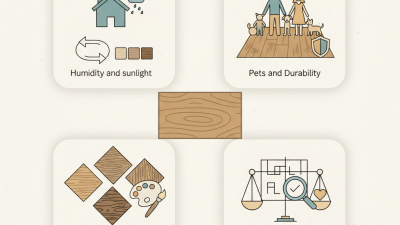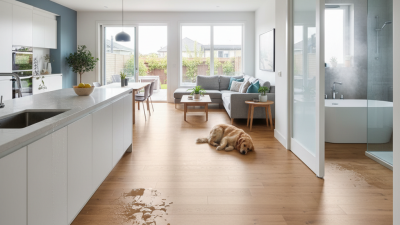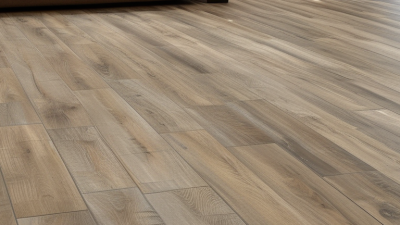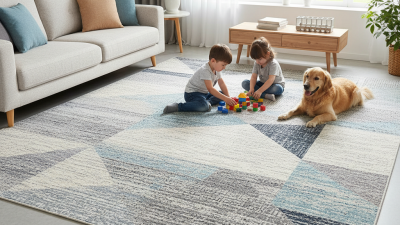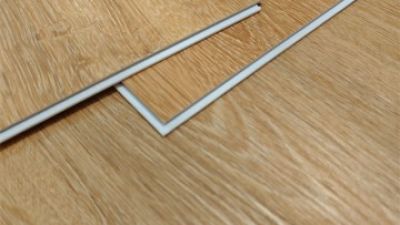
Picking the right Wood Grain Flooring isn’t just about matching a color to your furniture. Honestly, the real choice starts with considering your room’s humidity, how much foot traffic it gets, the lighting, and the installation environment. For example, a busy hallway needs a tougher finish to handle wear and tear, whereas a quiet guest bedroom might not. And don’t forget, a basement might need different materials compared to a dry upstairs bedroom.
Take a close look at the grain pattern, plank width, surface feel, and the finish. Natural wood often shows knots, mineral streaks, and subtle color shifts—that’s part of its charm. But keep in mind, those little imperfections might not match your style. Also, don’t assume a sample looks the same at home as it does in the store. Lighting can change everything. It’s a good idea to ask for full-sized samples and view them next to your windows, cabinets, and existing trim to get a real feel.
Most experienced flooring pros will compare specs, moisture guidelines, warranties, and maintenance needs before making a recommendation. Be sure to check out the manufacturer’s technical info and installation instructions too. Some floors are suitable for radiant heating, pets, kids, or heavy commercial use—important stuff to double-check. And never underestimate the importance of professional installation—skimping on subfloor prep can lead to gaps, movement, or uneven seams, which a lot of people overlook.
Remember, no flooring is perfect. A textured finish might hide scratches — yay! — but it can also trap more dust. Wider planks make a space look bigger but may require a more stable subfloor. Think about long-term comfort, how easy it is to repair if needed, and whether the sourcing is responsible. It’s all about balancing that great first impression with practical, everyday needs. Doing some careful comparison now means you’ll end up with a wood grain floor that looks fantastic today and stays durable in the years to come.
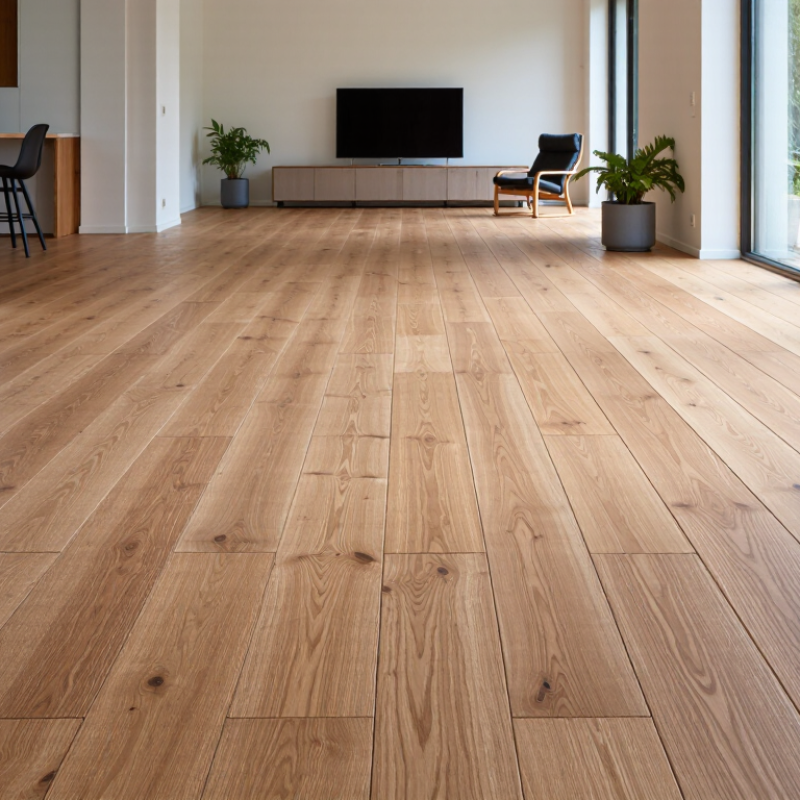
Choosing wood-grain flooring starts with understanding how each board is built. Solid wood flooring is milled from one piece of timber. It offers authentic texture and can be sanded several times. However, it expands and contracts noticeably with humidity. Leave proper expansion gaps near walls.
Engineered flooring uses a real wood surface over plywood or a layered wood core. This structure usually resists seasonal movement better than solid boards. It suits apartments, bedrooms, and rooms with moderate moisture changes.
Three-layer boards are a specialized engineered option. Their top, middle, and bottom layers run in different directions, improving dimensional stability. Check the wear-layer thickness, adhesive quality, and moisture rating before buying.
Small details matter. I once focused too much on color and ignored the subfloor. That shortcut caused uneven joints and a hollow sound underfoot. The installation surface should be dry, flat, and clean. A moisture meter provides useful evidence, especially on concrete.
In kitchens or rental spaces, a Wood Grain Vinyl Floor may offer easier cleaning and stronger water resistance, but it does not provide the same repairable timber surface.
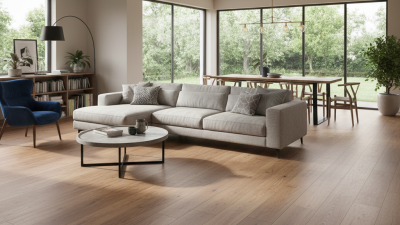
Ask for samples, then view them beside your walls and furniture. Natural light can change the grain dramatically.
Even careful selection has limits. Poor installation can undermine an excellent board.
How to Choose the Best Wood Grain Flooring?
Janka hardness gives flooring buyers a useful starting point. The USDA Forest Products Laboratory reports red oak at 1,290 lbf, hard maple at 1,450 lbf, and hickory at 1,820 lbf. The test measures force needed to embed a steel ball into wood. Higher numbers usually indicate better resistance to dents from shoes, furniture, and dropped objects. Hickory offers the strongest surface among these choices. It suits active homes with pets or heavy foot traffic. Maple provides a firm, cleaner-looking middle option. Red oak remains easier to work with and often shows more forgiving grain variation.
That distinction matters. Janka hardness does not measure every flooring risk. It does not predict finish wear, scratching, moisture movement, or installation stability. ASTM D143 defines the testing method, while the USDA Wood Handbook notes that wood properties vary with species, density, and moisture content. A board installed too wet may shrink later, regardless of its rating. Moisture changes the picture.
In practical inspections, denting often appears near doorways and dining chairs first. Felt pads help, but they cannot prevent every mark. Hickory resists compression better, yet its bold grain can make repairs less visually consistent. Maple may dent less than oak but can reveal scratches clearly under smooth finishes. I would question any claim that one species is universally best. Room use, local humidity, finish quality, and board construction deserve equal attention before choosing a grain.
Janka hardness measures the force required to embed a standard steel ball into wood. Higher values generally indicate greater resistance to dents and wear.
Comparison: Hickory has the highest Janka rating at 1,820 lbf, followed by hard maple at 1,450 lbf and red oak at 1,290 lbf.
When choosing wood grain flooring, moisture content deserves more attention than color or texture. The USDA Forest Products Laboratory published Wood Handbook, FPL-GTR-282, in 2021. Its equilibrium tables place wood near 6–9% at 30–50% relative humidity. This range is a useful benchmark. It is not a universal pass mark. Climate and ventilation can change it.
Use a calibrated pin or pinless meter. Follow its instructions carefully. Test several boards from opened cartons. Record readings by room. Measure the wood subfloor separately. For concrete, use the correct moisture test method.
NWFA Installation Guidelines commonly compare flooring and subfloor readings within specified differences. The limit may be 2–4 percentage points, depending on board width and material. Exact limits matter. Guessing does not.
Allow acclimation after the room reaches normal living conditions. A damp basement can make a 7% board seem acceptable. Watch for cupping, edge gaps, or a musty smell. These are clues, not measurements. For Wood Grain Spc, the decorative layer may imitate timber, but its core does not follow solid wood’s 6–9% rule. Check the product data sheet and substrate limits. Measuring only the package remains a weak habit. It deserves reconsideration.
How to Choose the Best Wood Grain Flooring?
Plank width changes how wood grain reads across a room. Narrow 75–120 mm boards create frequent lines, making compact rooms feel more detailed and active. They can also emphasize knots and tonal variation. Wider 180–300 mm boards show longer grain patterns and fewer joints. In a large living room, that calmer rhythm often feels more architectural. However, very wide boards may make a small room appear visually heavy. Scale matters more than fashion.
Industry data supports careful specification. Grand View Research estimates the global wood flooring market reached about USD 9.26 billion in 2023, with continued growth expected through 2030. This growth reflects broader demand for natural-looking surfaces, not a universal preference for wide planks. The National Wood Flooring Association’s technical guidance also stresses moisture testing, acclimation, and site conditions before installation. Grain beauty cannot correct poor preparation.
I once chose 240 mm boards for a narrow dining room. The grain looked impressive, but the floor felt crowded beside the table. A 150 mm width would have balanced the furniture better. For rooms under 12 square metres, 75–150 mm usually offers controlled visual movement. Medium spaces often suit 150–220 mm. Reserve 220–300 mm for open layouts with longer sightlines. Check several loose boards in daylight. Artificial light can hide contrast, and the “perfect” sample may look surprisingly busy at full scale.
How to Choose the Best Wood Grain Flooring?
A 19 mm solid board offers deep sanding potential and a convincing, continuous grain. It also reacts strongly to indoor moisture. The USDA Forest Products Laboratory’s Wood Handbook reports that tangential shrinkage is often about twice radial shrinkage in many species. That movement can create seasonal gaps or edge pressure. On site, installers commonly check both subfloor and board moisture before delivery. NWFA installation guidance also recommends maintaining indoor humidity near 30–50%. Solid wood needs discipline.
Multi-layer engineered construction uses cross-oriented wood layers beneath a real hardwood surface. This structure limits movement across the board’s width. It can suit concrete slabs, underfloor heating, and apartments with changing humidity. However, wear-layer thickness varies significantly. A thin surface may not tolerate repeated sanding. The product sheet matters more than attractive photography. Some listings use “Spc Wood Flooring” as a search term, but SPC is a resilient composite, not genuine wood flooring.
Tips: Measure moisture with a calibrated meter. Record readings. Leave expansion gaps around walls, pipes, and door frames. Choose 19 mm solid boards when long-term refinishing and traditional repair matter most. Choose engineered boards when stability and installation flexibility lead the decision. I would not treat either option as universally superior. A beautiful solid floor can fail in a damp room, while engineered flooring can disappoint when its top layer is too shallow. Reference: USDA Forest Products Laboratory, Wood Handbook; National Wood Flooring Association, Installation Guidelines.
| Evaluation Dimension | 19 mm Solid Wood Boards | Multi-Layer Engineered Wood | Practical Consideration |
|---|---|---|---|
| Basic construction | A single piece of natural wood, typically machined into boards with a finished thickness of approximately 19 mm. | A real-wood wear layer bonded to multiple wood-based layers, usually arranged with alternating grain directions for improved dimensional stability. | Both provide a genuine wood surface; the internal structure is the main difference. |
| Natural wood character | Shows the full-depth grain, knots, color variation, and movement of one solid timber species. | Provides a natural hardwood wear layer, although the visible surface is only part of the total board thickness. | ★★★★★ Solid boards usually offer the strongest traditional solid-wood character. |
| Dimensional stability | More sensitive to seasonal expansion and contraction because wood absorbs and releases moisture across the year. | Generally more stable because cross-layer construction reduces movement across the board. | Engineered construction is often more forgiving in rooms with changing humidity. |
| Recommended indoor humidity | Performs best when indoor relative humidity is kept near 40–60%, subject to the flooring manufacturer’s instructions. | Also benefits from approximately 40–60% relative humidity, but its construction can reduce the visible effects of moderate seasonal change. | Neither product should be treated as waterproof or installed without moisture control. |
| Moisture risk | Higher risk of cupping, crowning, gaps, or swelling when exposed to excessive subfloor or indoor moisture. | Usually better at resisting moisture-related dimensional change, but standing water can still damage the wood surface and core. | Use moisture testing, expansion gaps, and suitable room conditions for either option. |
| Installation methods | Commonly nailed or secret-nailed to a suitable wood subfloor; some products may also allow glue-down installation. | Often suitable for glue-down, nail-down, or floating installation, depending on the product specification. | Engineered flooring generally provides more installation flexibility. |
| Compatibility with underfloor heating | Often less suitable because thicker solid timber can transfer heat less efficiently and may move more with temperature changes. | Frequently preferred for underfloor heating when the product is specifically approved for that system. | Check the flooring, adhesive, surface-temperature, and installation requirements before purchase. |
| Heat transfer | The greater wood thickness provides more thermal resistance than thinner engineered constructions. | Usually offers more efficient heat transfer when installed over underfloor heating, depending on total board thickness and finish. | Lower thermal resistance can improve the response of a heated floor. |
| Refinishing potential | Can generally be sanded and refinished multiple times during its service life because the board is solid wood throughout. | Can usually be refinished, but the number of sanding cycles depends on the thickness of the real-wood wear layer and the sanding depth. | Confirm the wear-layer thickness before selecting engineered flooring for long-term restoration. |
| Expected service life | Potentially several decades or longer with correct installation, maintenance, and periodic refinishing. | Also capable of long service, particularly when it has a substantial wear layer and is maintained correctly. | Service life depends more on wear-layer thickness, finish quality, traffic, and care than on construction alone. |
| Subfloor requirements | Requires a structurally sound, dry, level, and suitably prepared subfloor; movement in the subfloor can affect the boards. | Still requires a dry and level subfloor, but the construction can accommodate some conditions more effectively than solid boards. | Professional moisture and flatness checks are recommended before installation. |
| Installation height | At approximately 19 mm, it can create a greater floor build-up and may require attention to doors, thresholds, and transitions. | Available in various thicknesses and may make it easier to coordinate with adjoining floor finishes. | Measure door clearances and finished-floor levels before ordering. |
| Acoustic performance | Can provide a solid, traditional underfoot sound, especially when fixed to a suitable timber structure. | Acoustic performance depends strongly on the subfloor, adhesive, underlay, and installation method. | Floor construction as a whole matters more than the board type alone. |
| Repairability | Individual boards can often be repaired or replaced, although matching aged wood and finish may be difficult. | Individual boards can also be repaired or replaced, but matching the visible wear layer may require careful sourcing. | Keep spare boards from the original installation for future repairs. |
| Maintenance | Requires regular sweeping or vacuuming, prompt removal of spills, protective pads, and control of indoor humidity. | Requires similar maintenance; the surface finish determines the recommended cleaning products and frequency. | Avoid excessive water and harsh cleaners on both types of wood flooring. |
| Environmental considerations | Uses a larger volume of solid timber per finished board, but can have a long service life and multiple refinishing cycles. | Uses a real-wood surface over a core that can make more efficient use of the selected hardwood species. | Look for legal timber sourcing, responsible forestry certification, low-emission adhesives, and durable finishes. |
| Typical material cost position | Often positioned as a premium traditional flooring choice because it uses solid timber throughout. | Can range from mid-level to premium depending on species, wear-layer thickness, core quality, finish, and board dimensions. | Compare complete installed cost rather than board price alone. |
| Best suited to | Traditional interiors, stable rooms, and projects prioritizing maximum refinishing depth | Underfloor heating, apartments, variable indoor conditions, and flexible installation layouts | |
| Overall choice | Choose when authentic solid-timber construction, substantial refinishing potential, and a traditional installation are the primary priorities. | Choose when dimensional stability, installation flexibility, and compatibility with modern heating systems are more important. | There is no universal winner; the best option depends on climate, subfloor, heating system, room use, and maintenance expectations. |
Note: Performance varies by wood species, board width, finish, wear-layer thickness, subfloor condition, installation method, and indoor climate. Always follow the technical requirements supplied for the specific flooring product.
A 20–30-year warranty sounds impressive, but it rarely promises a pristine surface for three decades. Read the coverage language carefully. Many warranties separate structural defects from finish wear, moisture damage, dents, and fading. The Federal Trade Commission advises consumers to check coverage, exclusions, and required maintenance before treating warranty length as proof of quality. Long promises can still be narrow.
Finish durability depends on more than gloss. NWFA Technical Guidelines recommend maintaining indoor humidity around 30–50% for wood floors. Dry air can create gaps, while excess moisture may cause cupping. Ask for abrasion-test results, finish-repair instructions, and realistic traffic ratings. A thicker wear layer can support future refinishing, but thickness alone does not guarantee better performance. I have seen attractive samples scratch quickly under dining chairs. That detail matters.
Engineered wood usually measures its wear layer in millimeters. Wood Flooring Spc products often report a protective layer in mils, using resilient-flooring test methods instead. Do not compare those numbers directly. Check whether the warranty covers visible wear through the finish, not merely manufacturing defects. Review ASTM test references, cleaning limits, and installation conditions. A 30-year claim may assume professional installation and controlled humidity. That assumption is easy to miss. Choose the floor whose documented test evidence matches your rooms, pets, footwear, and maintenance habits.
Stylish waterproof herringbone SPC flooring brings a refined architectural look to modern interiors while delivering reliable everyday performance. Its distinctive herringbone pattern adds movement and visual depth to living rooms, bedrooms, offices, retail spaces, and hospitality environments. The hard surface is waterproof, helping protect the floor from spills, humidity, and moisture-related damage, making it a practical choice for areas where conventional flooring may be less suitable.
Built with a strong and stable SPC structure, this flooring offers excellent resistance to fire, wear, scratches, and abrasion. Its dimensional stability helps prevent expansion, allowing the surface to maintain a smooth and attractive appearance through changing indoor conditions. The durable finish is designed to withstand frequent foot traffic while remaining easy to clean and maintain, supporting a comfortable and polished space over time.
Sourced from dependable China suppliers and produced in a factory committed to consistent quality, the flooring is also designed for efficient installation. Its user-friendly construction can simplify fitting and reduce installation time, making it suitable for renovation projects and new developments alike. Available in a range of elegant wood-inspired tones and textures, it combines practical performance with the timeless appeal of herringbone design.
Wood often measures near 6–9% at 30–50% indoor relative humidity. This is only a benchmark. Climate, ventilation, and building conditions can change it.
Use a calibrated pin or pinless moisture meter. Test several boards from opened cartons. Record readings by room. Do not trust one reading.
Yes. Test wood subfloors separately from flooring boards. Concrete needs a suitable moisture test method. Compare readings using the product’s specified limits.
Let the flooring acclimate after normal living conditions are established. A damp basement can make a 7% reading misleading. Check temperature, humidity, and ventilation first.
Cupping, edge gaps, and musty smells can indicate trouble. They are warning clues, not measurements. Confirm the issue with proper testing.
Not necessarily. Its decorative layer may resemble timber, but its core behaves differently. Check the product data sheet and substrate limits. Measuring only the package is a weak habit.
Narrow 75–120 mm boards create frequent lines and more visual activity. Boards from 180–300 mm show calmer, longer grain patterns. For rooms under 12 square metres, 75–150 mm often feels more balanced.
Wide boards may make compact rooms feel visually heavy. Furniture scale matters more than fashion. I once chose 240 mm boards for a narrow dining room. The result felt crowded.
A long warranty may cover structural defects, not flawless appearance. Check exclusions for moisture, dents, fading, finish wear, and maintenance. Long promises can still be narrow.
No. Engineered flooring may use millimetres, while resilient products may use mils. These numbers should not be compared directly. Review abrasion results, repair instructions, traffic ratings, and installation conditions.
Choosing the best Wood Grain Flooring begins with understanding the differences between solid, engineered, and three-layer boards. Solid flooring offers a single 19 mm section of timber, while engineered options use layered construction to improve dimensional stability in changing indoor conditions. When comparing species, Janka hardness provides a practical guide: oak measures about 1,290 lbf, maple 1,450 lbf, and hickory 1,820 lbf, making hickory the most resistant to dents among these choices.
Moisture content should typically remain within 6–9% to reduce the risk of excessive movement after installation. Plank widths from 75 to 300 mm can be selected according to the room’s scale, balancing visible grain with overall proportion. Finally, examine finish durability, protective wear layers, maintenance requirements, and whether a claimed 20–30-year warranty clearly covers residential use, surface wear, and installation conditions. A thoughtful comparison of these factors helps match flooring performance, appearance, and longevity to each space.