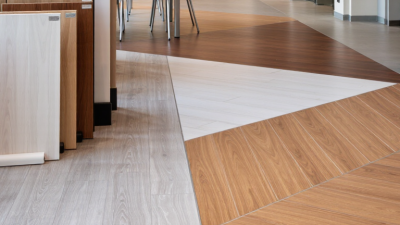
The global demand for Spc Wood Flooring continues to grow, driven by its stone-plastic core, water resistance, and practical installation. Yet product quality can differ sharply between manufacturers. Surface texture, locking strength, dimensional stability, and formaldehyde control deserve careful attention.
This guide examines the Top 10 SPC Wood Flooring Manufacturers Worldwide through clear, practical criteria. We consider manufacturing experience, research investment, production capacity, quality inspection, certification, design range, and customer support. We also look at how each company manages raw materials, packaging, warranty claims, and long-term supply. These details matter to distributors, contractors, architects, and homeowners. A beautiful sample is not enough.
Real performance matters more.
The ranking aims to offer a balanced industry reference, not an absolute verdict. Public information may vary by region, product series, and production year. Some companies communicate technical data better than others, while several smaller manufacturers may deserve more attention. That limitation should be acknowledged. Buyers should still request current test reports, installation instructions, sample batches, and written warranty terms before placing large orders. Local climate, subfloor conditions, and installation quality can also affect results. Even a reliable manufacturer cannot correct poor preparation. By comparing strengths and weaknesses, this overview helps readers make more informed decisions about Spc Wood Flooring and identify suppliers that combine technical capability with dependable business practices.
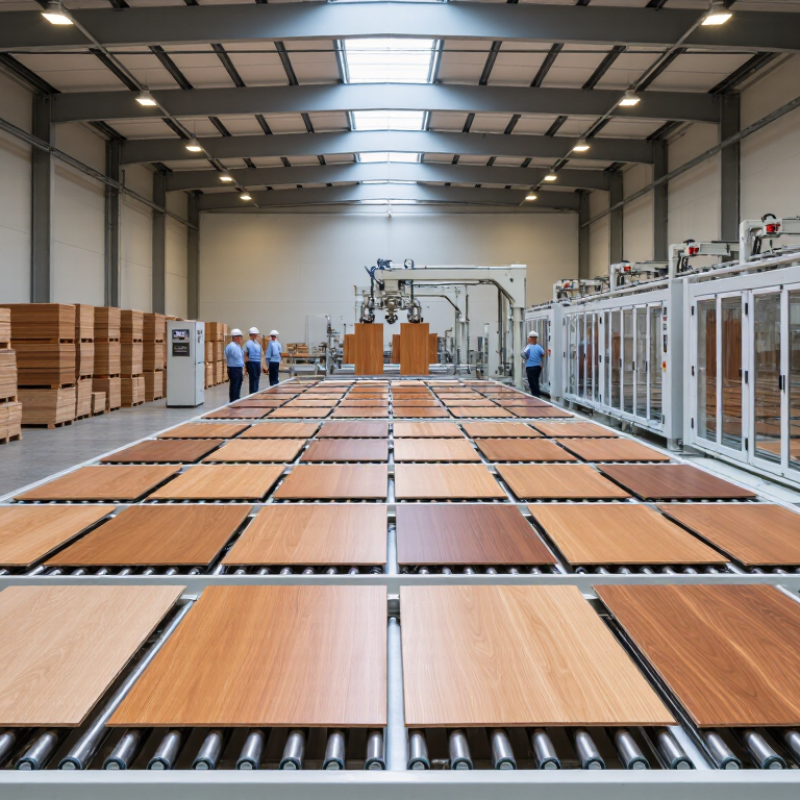
SPC wood flooring is a rigid-flooring product designed to resemble natural timber while offering stronger dimensional stability. Its core usually combines stone powder and polymer, creating a dense, waterproof structure. The printed wood image supplies the visual grain, while a transparent wear layer protects against scratches, stains, and everyday foot traffic. A balanced underlayment may also improve comfort and reduce hollow sounds.
In practical installations, Wood Flooring Spc performs well in kitchens, hallways, and busy commercial interiors. It resists moisture better than many traditional wood products. However, it is not completely indestructible. Sharp furniture legs, abrasive sand, or careless dragging can still damage the surface. Experienced installers check the subfloor carefully because small bumps may transfer through rigid planks. Temperature changes also deserve attention, especially near large windows and heating systems. The material is stable, but poor expansion spacing can still cause pressure and movement.
Tips: Keep the subfloor clean, dry, and level before installation. Use felt pads beneath chairs and tables. Leave the manufacturer’s recommended expansion gap around walls and fixed objects. A sample board can reveal color changes under natural light. One detail is often overlooked: very realistic grain patterns may feel less warm than genuine timber under bare feet. That trade-off deserves honest consideration.
When comparing the Top 10 SPC Wood Flooring Manufacturers Worldwide, evaluation should begin with evidence, not polished catalogs. Spc Flooring Wood products should show their core structure clearly: limestone composite, stabilizers, printed film, and protective wear layer. Reviewers can request cross-sections, technical data sheets, and recent batch samples. A thick wear layer may improve abrasion resistance, but thickness alone proves little. Surface texture, coating quality, and print stability also matter. Small details matter.
Independent laboratory testing gives the comparison credibility. Assess dimensional change after heat exposure, locking strength, impact resistance, slip performance, and color stability. Check formaldehyde and volatile organic compound results against the destination market’s requirements. Ask whether reports identify the tested product, production date, and laboratory method. Vague certificates should reduce confidence. Installation experience deserves equal attention. Experienced manufacturers explain subfloor limits, expansion gaps, moisture risks, and repair procedures in plain language. Their guidance should match the installation manual.
Reliable suppliers maintain batch records, incoming-material checks, and final inspections. Factory visits can reveal calibration habits, storage conditions, and whether rejected boards are isolated. Warranty terms should state exclusions clearly, not hide behind broad promises. Customer references help, especially after several seasons of use. Still, rankings are not perfect. A strong sample may not represent every batch. Even experienced evaluators can miss regional climate issues. Repeated testing and transparent communication make the judgment more dependable.
Top 10 SPC Wood Flooring Manufacturers Worldwide
The global SPC wood flooring market is shaped by regional manufacturing strengths, material access, and construction demand. China remains a major production hub, supported by extensive vinyl flooring supply chains and large-scale extrusion facilities. Many factories serve overseas buyers, but quality consistency can vary between production lines.
Southeast Asia is expanding quickly. Vietnam, Malaysia, and Thailand offer competitive labor costs and growing export capacity. Europe focuses more on regulated production, refined surface designs, and lower-emission materials. North American manufacturers often prioritize domestic distribution, commercial durability, and faster delivery. These regions are not directly comparable. Production statistics also differ by reporting method, which makes global rankings less precise than they appear.
Tips: Buyers should inspect factory audits, core density, locking accuracy, and wear-layer thickness. Request recent test reports, not generic certificates. Check moisture resistance with actual samples. A beautiful plank can still fail under uneven subfloors. Ask about batch control and replacement procedures. Small details matter. Experienced sourcing teams should compare at least three regions before choosing a supplier. Shipping costs, customs procedures, lead times, and after-sales support may change the real purchase price. The lowest quotation is rarely the complete answer.
Top 10 SPC Wood Flooring Manufacturers Worldwide
The worldwide market for SPC wood flooring is expanding with renovation demand and waterproof design trends. Grand View Research estimates the global vinyl flooring market reached approximately USD 36.9 billion in 2023. It also forecasts steady growth through 2030. This expansion supports a competitive field of manufacturers, especially in Asia, Europe, and North America. The leading ten producers are usually assessed by production capacity, export coverage, click-system consistency, and quality control rather than advertising alone.
A reliable Spc Wood Click Flooring manufacturer should provide stable core density, accurate locking profiles, and documented wear-layer performance. Factory audits should review extrusion lines, calibration equipment, and humidity controls. Small edge gaps can appear when boards leave production with uneven tolerances. That detail matters during installation. Testing can reference ISO 10582 and ASTM flooring methods, while independent laboratories should verify dimensional stability, slip resistance, and formaldehyde emissions. Industry reports from Fortune Business Insights also indicate continuing demand for resilient flooring in residential and commercial projects. However, market rankings remain imperfect because private companies rarely disclose comparable sales, capacity, or defect rates. Buyers should question impressive claims. A glossy sample is not enough. Real evaluation needs batch records, installation trials, and after-sales evidence from multiple regions.
Comparative industry benchmark table. Manufacturer identities and brand names are intentionally omitted; specifications represent commonly documented commercial ranges in the global SPC flooring market.
| Rank | Primary Manufacturing Region | Typical Product Construction | Overall Thickness | Wear-Layer Range | Common Plank Sizes | Core Composition | Surface Protection | Typical Testing or Compliance | Primary Market Focus | Export Capability |
|---|---|---|---|---|---|---|---|---|---|---|
| 1 | East Asia | Multi-layer rigid-core plank with printed décor film and attached underlayment | 4–8 mm | 12–22 mil | 1220–1524 × 180–230 mm | Stone-plastic composite with calcium carbonate and PVC | UV-cured polyurethane or ceramic-bead coating | Abrasion, dimensional stability, slip resistance, and formaldehyde testing | Residential and light commercial | Private-label and container-load supply |
| 2 | Southeast Asia | Water-resistant click flooring with embossed wood visual and balanced backing layer | 4–7 mm | 12–20 mil | 1220–1520 × 180–230 mm | Rigid PVC-mineral composite | Transparent wear film with UV finish | Water-resistance, locking-strength, indentation, and dimensional-change tests | Residential renovation and rental housing | OEM, ODM, and distributor programs |
| 3 | Central and Eastern Europe | Rigid-core plank designed for floating installation and underfloor-heating compatibility | 5–8 mm | 12–22 mil | 1200–1530 × 180–230 mm | Mineral-reinforced PVC core | Matt polyurethane coating with registered embossing | Indoor-air emissions, fire reaction, slip resistance, and wear classification | European residential and contract interiors | Regional distribution and project orders |
| 4 | North America | Commercial-grade SPC plank with reinforced locking edge and optional acoustic pad | 5–9 mm | 20–30 mil | 1220–1830 × 180–300 mm | High-density stone-polymer composite | Heavy-duty UV and scratch-resistant finish | ASTM-based wear, indentation, slip, and dimensional-stability testing | Multifamily, retail, hospitality, and offices | Wholesale, retail, and project distribution |
| 5 | South Asia | Cost-focused SPC flooring with wood-look décor and standard click assembly | 4–6.5 mm | 12–20 mil | 1220–1520 × 180–230 mm | PVC and calcium-carbonate composite | UV coating with transparent protective layer | Basic abrasion, water-resistance, and dimensional-change testing | Residential construction and renovation | Bulk export and contract manufacturing |
| 6 | Western Europe | Premium rigid flooring with high-definition décor, bevelled edges, and integrated acoustics | 5–10 mm | 20–30 mil | 1200–1800 × 180–300 mm | Low-emission mineral-polymer core | Matte polyurethane, stain-resistant finish | Indoor-air quality, fire, slip, acoustic, and wear-performance testing | Premium residential and design-led commercial projects | Specialist retailers and specification channels |
| 7 | Latin America | Moisture-resistant click plank adapted for warm climates and concrete subfloors | 4–8 mm | 12–22 mil | 1220–1520 × 180–230 mm | Rigid PVC-mineral core | UV-cured wear layer with stain protection | Water, abrasion, indentation, and heat-exposure tests | Residential, retail, and hospitality | Importers, distributors, and private-label buyers |
| 8 | Middle East | High-stability SPC plank selected for temperature variation and intensive foot traffic | 5–8 mm | 20–30 mil | 1220–1830 × 180–300 mm | Dense calcium-carbonate and PVC composite | Enhanced UV and stain-resistant coating | Heat, light, abrasion, slip, and dimensional-stability testing | Hotels, offices, retail, and luxury housing | Project-based international supply |
| 9 | Oceania | Residential rigid-core flooring with acoustic backing and water-resistant locking joints | 5–8 mm | 12–22 mil | 1220–1520 × 180–230 mm | Mineral-reinforced PVC core | Low-gloss polyurethane finish | Slip, wear, water-resistance, and indoor-emissions testing | Residential remodeling and coastal applications | Retail chains and flooring wholesalers |
| 10 | Africa | Durable SPC plank emphasizing easy installation, moisture resistance, and logistics efficiency | 4–8 mm | 12–22 mil | 1220–1520 × 180–230 mm | PVC and mineral-filled rigid core | UV-cured protective coating | Abrasion, water, locking-strength, and dimensional-stability testing | Residential, retail, offices, and hospitality | Distributor-led and container-load export |
SPC wood flooring manufacturers now compete through product range, core engineering, and documented quality. Grand View Research reported continued growth in the global luxury vinyl flooring market through 2030, supported by waterproof construction and easier maintenance. SPC remains one segment within that wider category. Product ranges commonly include 4–8 mm planks, 0.3–0.7 mm wear layers, embossed surfaces, and attached acoustic underlays. Spc Wood Effect Flooring can reproduce oak pores, knots, and matte finishes, but printed realism differs sharply between collections.
Technology determines daily performance. A limestone-filled polymer core improves dimensional stability, while click-lock joints reduce installation time. ASTM F3261 provides a useful reference for rigid polymeric-core flooring. ISO 10582 also helps assess wear, dimensional change, and classification. Look for test reports, not only attractive specifications. A thicker wear layer can support heavier traffic, but it does not correct a weak locking system or poor subfloor preparation. Details matter.
Quality comparison should examine color consistency across cartons, locking strength, moisture testing, and independent abrasion results. Flooring tested at 23°C may perform differently in a sunlit room reaching 40°C. That gap deserves attention. Reports from Grand View Research and Fortune Business Insights indicate strong resilient-flooring demand, yet market growth does not guarantee equal manufacturing discipline. I would question vague claims such as “commercial grade” without test methods, tolerances, and warranty conditions. Some collections look convincing under showroom lighting, then reveal repetitive grain patterns at home. Performance varies.
Choosing the right SPC flooring manufacturer matters more than following a worldwide top-ten list. A reputable supplier should explain its stone-plastic composite structure, wear layer, locking system, and dimensional stability clearly. Ask for recent laboratory reports, product samples, and production records. Check whether testing covers abrasion, fire performance, slip resistance, and formaldehyde emissions. Specifications should match your project, not merely look impressive.
Visit the factory if possible. Observe raw material storage, mixing equipment, pressing lines, and quality inspections. Experienced buyers should compare several batches, because one attractive sample proves little. Request references from similar commercial or residential projects.
Discuss installation training, replacement procedures, lead times, and warranty limits in writing. A reliable manufacturer admits weaknesses instead of promising perfection. That honesty is useful.
Tips:
Place samples near a window and under warm lighting. Check color consistency, edge alignment, surface texture, and clicking force. Measure plank thickness with a caliper. Ask how rejected products are handled. Confirm packaging protects corners during shipment. Review the technical data with an independent flooring installer, not only a sales representative. No checklist is perfect. Local climate, subfloor moisture, and installer skill can change performance. A manufacturer may pass every factory test but still disappoint when installation conditions are ignored. Select the partner that offers traceable evidence, practical support, and answers you can verify.
GES6023 SPC flooring combines the refined appearance of luxury flooring with the practical performance required for modern European homes. Manufactured in China by experienced flooring suppliers, it features a waterproof, rigid stone-plastic composite core designed to provide reliable dimensional stability in kitchens, bathrooms, hallways, living rooms, and other active areas. Its durable surface helps resist everyday wear while maintaining a comfortable and polished look.
Designed to reflect changing interior trends, GES6023 is available with visual options inspired by natural wood grains, stone patterns, and contemporary concrete textures. These versatile designs complement minimalist, Scandinavian, rustic, and industrial interiors, allowing homeowners to create personalized spaces without sacrificing functionality. Factory production also supports consistent quality, precise dimensions, and efficient installation, while suitable underlayments can enhance comfort and acoustic performance. With its balance of waterproof protection, elegant styling, and practical maintenance, this SPC flooring solution suits both residential renovations and modern interior projects.
China remains a major production center with extensive supply chains and large extrusion facilities. Southeast Asia is expanding. Vietnam, Malaysia, and Thailand offer competitive labor costs and growing export capacity. European production often emphasizes regulated processes and lower-emission materials. North American factories may focus on domestic distribution and commercial durability.
Production figures use different reporting methods. Therefore, worldwide rankings may look more precise than they are. A smaller supplier might offer stronger batch control or better support. The lowest quotation is rarely the complete answer.
Request recent laboratory reports, production records, and physical samples. Check abrasion, fire performance, slip resistance, and formaldehyde emissions. Generic certificates may not describe the current product. Ask for traceable batch information. Evidence matters more than polished promises.
Place samples near a window and under warm lighting. Check color consistency, edge alignment, surface texture, and locking force. Measure plank thickness with a caliper. Test moisture resistance using actual samples. One attractive plank proves little.
Inspect raw material storage, mixing equipment, pressing lines, and quality inspections. Observe whether rejected products are separated and recorded. Compare samples from several production batches. Small details matter. A clean showroom is not enough.
Review the composite core, wear-layer thickness, locking system, and dimensional stability. Uneven subfloors can cause failure, even with attractive flooring. Subfloor moisture and local climate also affect results. Installation skill matters more than many buyers expect.
Discuss lead times, installation training, replacement procedures, and warranty limits in writing. Confirm that packaging protects plank corners during shipment. Review customs procedures, shipping costs, and after-sales support. The quoted price may change later. That can be overlooked.
Compare at least three regions and several production batches. Request references from similar residential or commercial projects. Ask an independent flooring installer to review the technical data. Choose a supplier offering evidence, practical support, and verifiable answers. No checklist is perfect.
Spc Wood Flooring combines a realistic wood appearance with a rigid stone-plastic composite core, offering strong dimensional stability, water resistance, easy maintenance, and good wear performance. This article explains its key features and examines how manufacturers are evaluated, including raw material quality, production technology, product consistency, environmental responsibility, certifications, warranty support, and delivery capabilities. It also provides an overview of major manufacturing regions and the factors shaping the global SPC flooring market.
The comparison of the top ten worldwide manufacturers focuses on product range, surface designs, core construction, locking systems, thickness options, acoustic solutions, and quality-control processes, without promoting any specific brand. Finally, the article offers practical guidance for selecting a suitable supplier by considering project requirements, climate, installation conditions, budget, customization needs, testing documentation, production capacity, and after-sales service. This framework helps buyers make informed decisions for residential, commercial, and hospitality flooring applications.