Honestly, choosing SPC click floors in 2026 is about more than just comparing colors and prices. A sample can look super convincing and still hide stuff like weak locking edges, an uneven core, or poor acoustic performance. What you really want is a floor that can survive everyday life: muddy shoes, rolling chairs, sunlight, and those rushed cleanups.
Bill Dearing is a veteran flooring standards specialist and president of the North American Laminate Flooring Association. He offers a useful reminder: “A flooring product must perform beyond the showroom.” That idea fits SPC selection pretty well. When you’re picking SPC, it’s worth looking beyond the surface—check the wear layer, core density, dimensional stability, and how precise the click system is. The small details really do matter. A tight joint today might end up as a visible gap after seasonal temperature changes.
So, this guide is really about comparing SPC Click Floors with a bit of practical judgment. It looks at things like room conditions, how flat the subfloor is, moisture control, installation tolerance, and what maintenance will be like long term. Product certifications and clear warranties are worth paying attention to as well. They won't replace a careful installation, of course, but they can give you a hint about whether a supplier is willing to stand behind their product.
Honestly, there's no such thing as a perfect checklist. Even a brand you trust can let you down if it's installed over a subfloor that isn't level. It's an easy thing to overlook, too. So take a good look at things like plank thickness, whether it has attached underlay, the surface texture, and how easy it is to get replacements. And ask yourself: if one plank gets damaged, can you pull it out without tearing up half the room?
If you’re a homeowner, designer, or contractor, “Floors For Floors” should really be about matching the product to the space—not just chasing the lowest quote. In 2026, the smartest choice will come down to a mix of looks, real technical proof, comfort, and keeping your expectations realistic. And honestly? The prettiest option isn’t always the one you can count on.
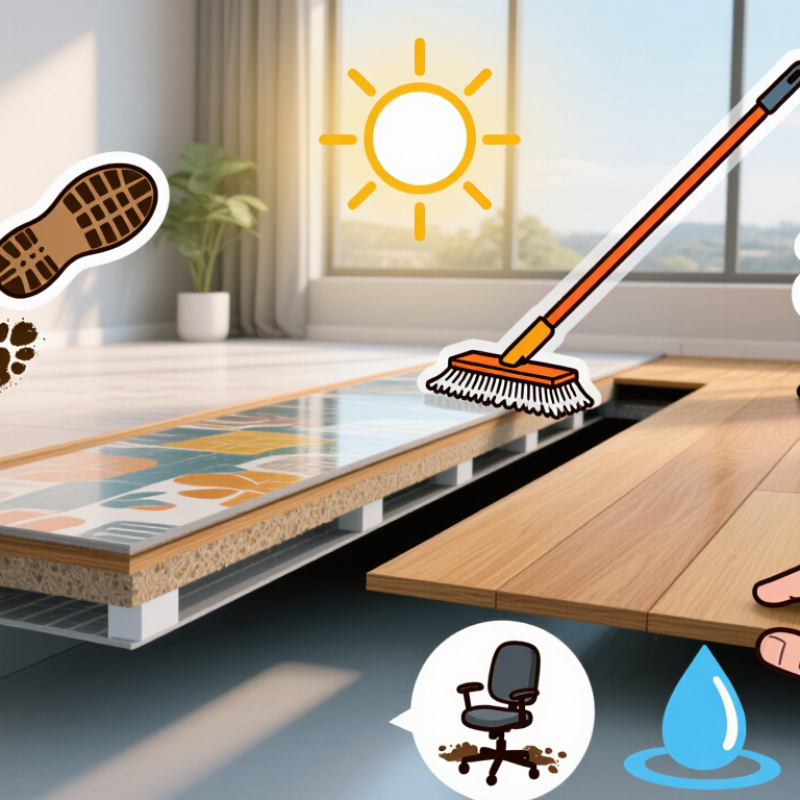
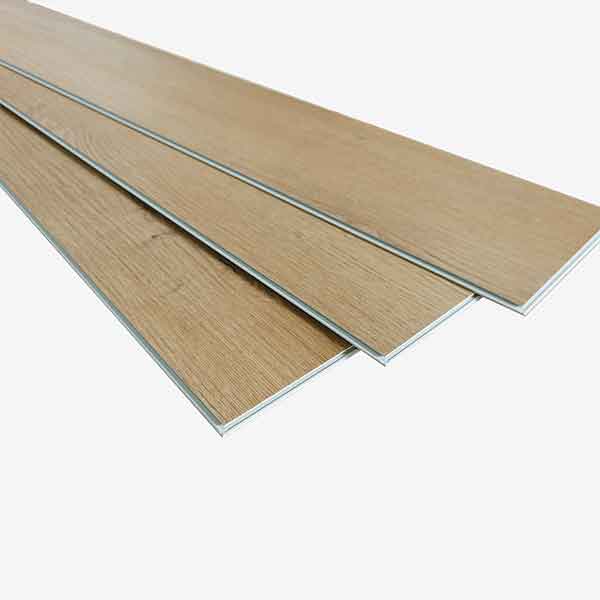
Spc Click Floors are rigid vinyl planks made with a stone-plastic composite core. Their layered structure usually includes a protective coating, wear layer, printed décor film, SPC core, and attached backing. The click system joins planks without wet adhesive, creating a cleaner installation. It also allows individual boards to be replaced when damage occurs.
In site inspections, the subfloor often matters more than the flooring itself. It should be firm, dry, and reasonably level. Small bumps may telegraph through the rigid core over time. The dense structure handles daily traffic well and resists dents better than many softer vinyl products. Still, “water-resistant” does not mean every installation is safe from moisture. Poor edge sealing or trapped dampness can cause trouble. Sound reduction also depends on the backing, room shape, and installation quality. This is sometimes overlooked.
Tips: Check the locking profile before purchase. Inspect several cartons for shade variation. Leave the recommended expansion space around walls and fixed cabinets. Use a moisture test on concrete. Do not rely on appearance alone. One weak board can affect the whole floor. Before choosing Spc Click Floors in 2026, compare wear-layer thickness, core density, backing performance, warranty terms, and repair access. A lower price may look attractive, but uneven preparation can erase that saving quickly.
Before choosing an SPC click floor, inspect the room rather than trusting a product image. Measure humidity near exterior walls, windows, and plumbing fixtures. A damp basement may need moisture control before installation. SPC resists surface water, but persistent moisture can still affect the subfloor and joints.
Check whether the subfloor is firm, clean, and reasonably level. Small dips can create movement, clicking sounds, or visible gaps. Use a straightedge across several areas, especially beside doorways. Remove loose flooring and repair weak spots. I once underestimated a shallow dip near a cabinet. The floor looked fine at first, but the joint noise became noticeable later.
Room temperature also matters. Let the unopened cartons rest indoors as directed by the installation instructions. Leave the required expansion space around walls, pipes, and fixed cabinets. Sunlit rooms deserve extra attention. Strong afternoon heat can raise surface temperatures and make expansion more noticeable. In busy kitchens, consider impact, water exposure, and cleaning habits. In bedrooms, sound and underfoot comfort may matter more. Search terms like Plastic Flooring Floors can be confusing, because not every plastic-based floor has the same structure or installation requirements. Check technical data, warranty conditions, and local installer advice. My preference is to record moisture, temperature, and subfloor findings before ordering; skipping that step is easy, but regrettable.
How to Choose SPC Click Floors in 2026
For Floors Home projects, SPC click floor thickness deserves careful attention. Thicker planks can reduce flexing over minor subfloor imperfections. However, thickness alone does not guarantee stability. A 5–6.5 mm plank often feels more solid underfoot than a thinner option. The subfloor still needs to be clean, dry, and level. Measure the doorway.
The wear layer protects the printed surface from scuffs, grit, and repeated foot traffic. For bedrooms, a moderate wear layer may perform well. Entryways, kitchens, and rental spaces usually need stronger protection. Look for clearly stated thickness, not vague phrases like “commercial grade.” A thicker layer can resist abrasion longer, but it cannot prevent deep dents from heavy furniture.
Core density affects impact response and joint performance. A dense SPC core generally feels firmer and may support click connections more consistently. Yet an extremely rigid board can transfer stress to an uneven subfloor. That detail matters. I once treated overall thickness as the main quality indicator, then noticed joint movement caused by poor floor preparation. The lesson is slightly uncomfortable: specifications cannot replace installation discipline. Check locking profiles, expansion requirements, and room temperature before fitting. Place felt pads under chairs, and keep sharp grit away from entrances.
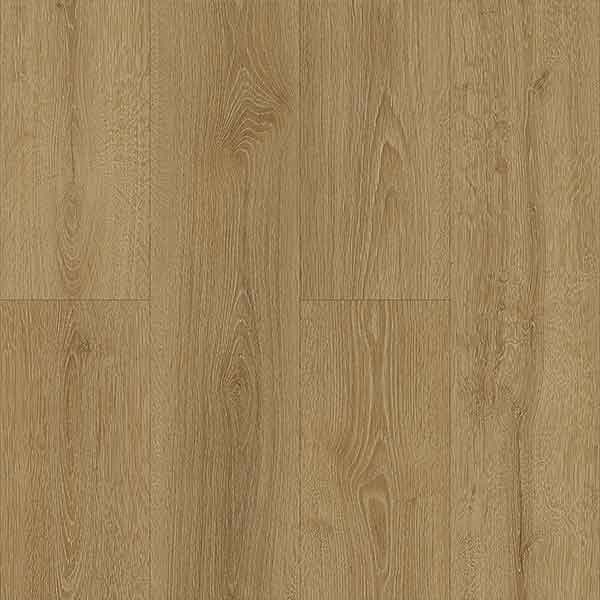
Color should respond to the room, not only current design trends. In 2026, warm oak tones remain practical because they soften white walls and metal furniture. Pale colors can enlarge a narrow hallway, but they may show dust near entrances. Darker planks create contrast, although scratches and pet hair become more visible. Always inspect a full-size sample under morning and evening light. Small samples can mislead.
Texture affects both appearance and daily comfort. Light embossing can resemble natural grain without feeling overly rough under bare feet. Deeper textures may provide visual character, but they can collect more dirt during cleaning.
I once preferred a dramatic brushed surface, then reconsidered it after seeing dust settle in the grooves. Choose texture according to traffic, cleaning habits, and lighting. Glossy finishes reflect more light, while matte surfaces usually appear calmer and hide minor marks better.
Edges deserve careful attention. Square edges create a continuous visual field, while micro-beveled edges define each plank with subtle lines. Beveled edges can make wide rooms feel more structured, but they may emphasize uneven installation. The subfloor must be clean, dry, and sufficiently level before click flooring is fitted. Do not use edge style to disguise preparation problems. Check the locking system, surface coating, and care instructions with the installer or technical documentation. I would rather accept a less fashionable color than replace flooring that does not suit the room’s light, traffic, or maintenance routine.
How to Choose SPC Click Floors in 2026
Waterproofing begins beneath the planks, not inside the product brochure. I check the locking joint, edge coating, and manufacturer’s immersion test details. A floor may resist spills but still fail over damp concrete. ASTM F2170 testing measures internal concrete humidity before installation. ASTM F710 also recommends checking concrete conditions carefully. In a bathroom, I inspect corners, pipe openings, and expansion gaps with a flashlight. Small gaps become large problems. Designed Floors should clearly state exposure limits, installation methods, and warranty exclusions. I still question vague claims such as “100% waterproof.”
Safety requires more than a low price and a thick wear layer. ANSI A326.3 provides a recognized method for evaluating wet dynamic coefficient of friction on hard flooring. Ask for test results that reflect real footwear and moisture. The U.S. Environmental Protection Agency reports indoor pollutant levels can be two to five times higher than outdoor levels. Low-emission documentation therefore matters. Look for testing under CDPH Standard Method v1.2 or an equivalent independent protocol. A certificate without a matching product code deserves another check.
Environmental certifications should reveal data, not decorate packaging. An Environmental Product Declaration follows ISO 14025 and usually reports impacts across a product life cycle. The UNEP and GlobalABC 2024 report states that buildings consume 32% of global energy and produce 34% of global carbon dioxide emissions. Flooring is only one small part, but repeated replacement adds waste. Choose verified recycled-content claims, transparent material disclosures, and realistic service-life information. My judgment is not perfect; certification scope can be easy to misread.
A practical, evidence-based comparison framework for evaluating stone-plastic composite click flooring.
| Evaluation Dimension | Measurable Criterion | Relevant Standard or Evidence | What to Check in 2026 | Practical Interpretation |
|---|---|---|---|---|
| Waterproofing claim | Resistance of the flooring system to surface water and routine wet cleaning | Product-specific water-resistance or waterproof test report; installation instructions; warranty terms | Confirm whether the claim applies to the plank only or to the complete installed system, including joints, perimeter, and subfloor | “Waterproof” should not be treated as protection against flooding, standing water below the floor, or installation defects unless expressly stated |
| Click-joint integrity | Joint engagement, locking strength, and resistance to opening during use | Installation instructions, locking-system test data, dimensional tolerances, and field-repair guidance | Check allowable subfloor flatness, expansion gaps, room-size limits, and whether wet areas require additional sealing | A strong click profile cannot compensate for an uneven subfloor or insufficient movement allowance |
| Resilient flooring classification | Construction, wear layer, surface, and performance classification | ASTM F1700 or ISO 10582, where applicable to the product construction | Verify the declared class, total thickness, wear-layer thickness, surface treatment, and intended-use category | A thicker product is not automatically more durable; surface finish, wear layer, locking system, and installation quality also matter |
| Wear resistance | Resistance to abrasion, scuffing, staining, and appearance change | Applicable product-standard test reports and documented commercial-use rating | Request test results for abrasion and stain resistance rather than relying only on marketing terms such as “heavy duty” | Commercial corridors, entrances, and homes with pets generally require stronger surface protection than low-traffic rooms |
| Dimensional stability | Expansion, contraction, curling, and gapping caused by temperature or humidity changes | Dimensional-stability test data, installation temperature range, and acclimation requirements | Check requirements for sunlight, conservatories, heating systems, large glazed areas, and direct heat exposure | Rigid-core flooring can still move or distort when exposed to excessive heat, thermal gradients, or inadequate expansion gaps |
| Slip resistance | Wet dynamic coefficient of friction for applicable walking surfaces | ANSI A326.3 testing may be relevant; a wet DCOF value of 0.42 is commonly used for level interior surfaces under that method | Confirm the test method, flooring texture, contamination condition, and whether the result applies to the exact finish | Slip resistance depends on footwear, contaminants, cleaning, slope, and use; no single value guarantees safety in every condition |
| Fire performance | Flame spread, smoke development, and critical radiant flux where required by the project | ASTM E648 for critical radiant flux and ASTM E662 for smoke density may be specified; local building codes control acceptance | Request a complete fire-test report and confirm the required classification for the building type and installation location | Do not compare fire results unless the test method, product construction, backing, and installation conditions are equivalent |
| Indoor air emissions | Volatile organic compound emissions after installation | CDPH Standard Method v1.2 or an equivalent recognized emissions protocol | Check the certificate scope, product reference, expiration or surveillance status, and whether adhesives or underlayments are included | Low-emitting certification supports indoor-air objectives but does not mean the product contains zero chemicals |
| Formaldehyde and restricted substances | Material composition and compliance with chemical restrictions | Applicable regional requirements such as REACH, RoHS, or formaldehyde-emission rules, depending on the market | Request a current declaration covering the product, backing, inks, coatings, plasticizers, and packaging where relevant | Compliance is jurisdiction-specific; documentation should identify the legal framework and assessment date |
| Environmental certification | Independent assessment of indoor emissions, material health, or environmental performance | Recognized programs may include FloorScore, GREENGUARD Gold, or comparable third-party certification schemes | Verify the exact product collection, manufacturing location, certificate number, validity, and certification criteria | A certification applies only within its stated scope; it should not be presented as proof of overall environmental superiority |
| Life-cycle transparency | Disclosure of manufacturing impacts, material inputs, use stage, and end-of-life assumptions | Third-party-verified Environmental Product Declaration based on ISO 14025 and relevant PCR requirements | Compare declared service life, global-warming potential, recycled content, transport assumptions, and end-of-life scenario | EPD figures are comparable only when the declared unit, product category rules, and system boundaries are aligned |
| Recycled content | Percentage and type of pre-consumer or post-consumer recycled material | Product-specific material declaration or third-party chain-of-custody documentation | Check whether the percentage is by total product weight, core weight, or another defined basis | A recycled-content percentage is meaningful only when its calculation basis and verification method are disclosed |
| Repair and replacement | Ability to replace individual planks and availability of matching materials | Installation manual, locking-system instructions, spare-stock policy, and warranty conditions | Confirm replacement method, color-lot variation, spare quantity, and expected product availability period | Repairable click systems can reduce waste and disruption compared with replacing an entire floor |
| Maintenance and hygiene | Resistance to routine cleaning agents, staining, and moisture-related maintenance issues | Chemical-resistance test data, cleaning instructions, and approved-maintenance products | Check prohibited chemicals, recommended dilution, cleaning frequency, and whether steam cleaning is excluded | Following the cleaning specification helps preserve surface finish, slip performance, and warranty coverage |
| Warranty and documentation | Coverage period, use classification, installation requirements, and exclusions | Written warranty, technical data sheet, installation manual, safety data where applicable, and current certificates | Match the documents to the exact SKU, thickness, wear layer, surface finish, and intended installation area | The strongest purchase decision is supported by traceable documents, not by an isolated performance claim |
How to Choose SPC Click Floors in 2026
Evaluating Installation Systems, Maintenance Needs, and Long-Term Value
Choosing an SPC click floor in 2026 requires more than comparing plank colors. The installation system affects labor, repair access, and daily stability. Click-lock planks usually install faster than glue-down flooring. They can also be lifted and replaced when one plank is damaged. That convenience depends on a level, dry, and clean subfloor. Check moisture readings before installation. Follow the floor’s published tolerance, rather than guessing.
During site inspections, I look for uneven transitions, door clearance, and movement around large rooms. A floating floor needs the correct expansion space at walls and fixed objects. Skipping that detail may cause peaking or separated joints later. Underlayment choices also matter. Some products include an attached layer, while others need a compatible underlayment. Extra padding without approval can weaken the locking profile. Small details matter.
Maintenance is generally simple: sweep grit, wipe spills promptly, and use a damp, not saturated, mop. Avoid abrasive powders and harsh solvents. Felt pads help, but rolling office chairs can still mark the wear layer. Ask about wear-layer thickness, repair procedures, warranty exclusions, and expected traffic before buying. Long-term value comes from stable installation and realistic care, not a low purchase price. I would not treat a warranty as proof of unlimited durability. Keep spare planks. Color batches may change. That detail is easy to overlook.
Evaluating installation systems, maintenance needs, and long-term value
Click-lock SPC flooring generally scores highest for installation simplicity and repairability because it can be installed as a floating floor without wet adhesive. Glue-down systems can provide strong dimensional stability on demanding subfloors but usually require more preparation and specialist labor. Loose-lay systems offer relatively fast installation and selective replacement. Scores use a practical 0–10 benchmark, where higher values indicate easier installation, simpler maintenance, easier repair, or stronger long-term value. Actual performance depends on subfloor condition, traffic, moisture exposure, product specification, and installation quality.
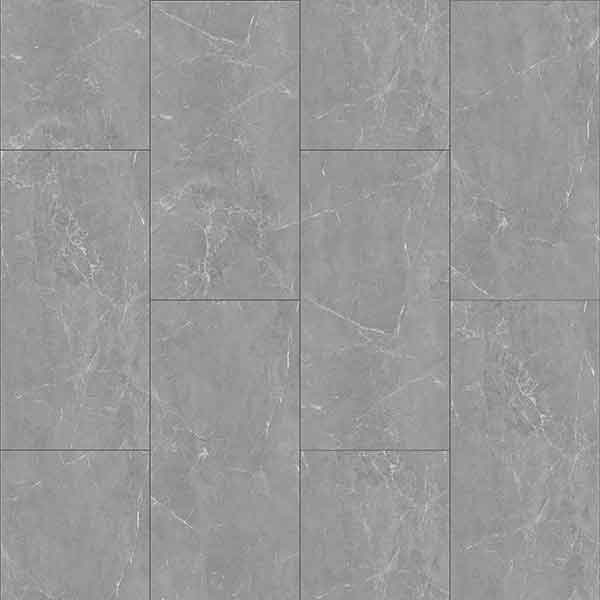
European-style SPC vinyl plank flooring from China suppliers offers a practical way to create a refined and comfortable home interior. Designed to capture the natural character of wood grains, stone patterns, and concrete textures, this flooring provides a wide range of visual choices without limiting your decorating concept. Warm wood-inspired surfaces can add softness to living rooms and bedrooms, while stone or concrete effects can create a clean, contemporary atmosphere in kitchens, hallways, and workspaces.
Its adaptable appearance suits several European-inspired interiors, especially minimalist and industrial designs. Minimalist spaces can benefit from subtle colors, balanced patterns, and uncluttered plank layouts, allowing furniture and natural light to remain the focus. For industrial rooms, concrete textures and deeper tones can complement metal details, exposed surfaces, and practical furnishings. The flooring is also suitable for homeowners in China who want to refresh their interiors with a coordinated, modern aesthetic.
Produced through carefully managed factory processes and supported by reliable suppliers, this SPC flooring solution combines decorative flexibility with consistent manufacturing quality. Its selection of natural-looking finishes makes it easier to coordinate floors with wall colors, furniture materials, and lighting conditions, helping create a home that feels both elegant and personal.
Check moisture near exterior walls, windows, pipes, and plumbing fixtures. A damp basement needs moisture control first. Inspect the subfloor for dirt, weakness, and uneven areas. Record your findings before ordering. Skipping this step can become expensive.
Place a straightedge across several floor areas. Pay special attention beside doorways and cabinets. Small dips may cause movement, clicking sounds, or visible gaps. Repair weak spots before installation. It matters.
It resists surface water, but persistent moisture can still damage joints and the subfloor. Wipe spills promptly. Do not install over a damp base. I once trusted surface resistance too much. That judgment needed reconsideration.
A 5–6.5 millimeter plank often feels firmer underfoot. Greater thickness may reduce flexing over minor imperfections. However, thickness alone does not guarantee stability. A poorly prepared subfloor can still create joint movement.
The wear layer helps resist scuffs, grit, and repeated foot traffic. Bedrooms may need moderate protection. Entryways, kitchens, and rental spaces usually need stronger protection. It will not prevent deep dents from heavy furniture.
A dense core can feel firmer and support click connections more consistently. An extremely rigid board may transfer stress to an uneven subfloor. Check the locking profile and installation requirements. Specifications cannot replace careful preparation.
Confirm room temperature, doorway clearance, transitions, and expansion space. Leave space around walls, pipes, and fixed cabinets. Check whether an attached underlayment is included. Extra padding may weaken the locking system.
Sweep grit regularly and wipe spills with a damp, not saturated, mop. Avoid abrasive powders and harsh solvents. Use felt pads under chairs. Rolling office chairs may still leave marks. Keep spare planks, because color batches can change.
Choosing Spc Click Floors in 2026 requires more than comparing colors and prices. Start by understanding their layered structure, including the protective wear layer, decorative film, rigid stone-plastic core, and click-lock backing. Before selecting a product, assess the room’s moisture levels, subfloor condition, traffic intensity, sunlight exposure, and temperature changes. Thickness, wear-layer strength, and core density should match the space’s practical demands, while textures, edge profiles, colors, and surface finishes should complement the interior design.
A reliable choice should also offer effective waterproofing, slip resistance, low emissions, and compliance with relevant safety and environmental standards. Consider the installation system carefully, especially whether the flooring can be installed efficiently over a suitable subfloor and removed or replaced when necessary. Finally, evaluate cleaning requirements, resistance to scratches and stains, expected service life, and overall value rather than focusing only on the initial cost. A balanced decision will provide attractive, stable, safe, and easy-to-maintain flooring for years.