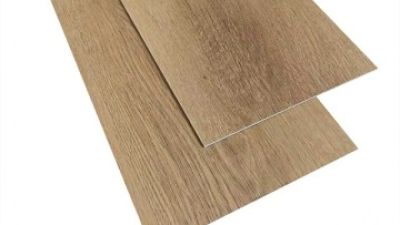
So, why choose Plastic Planks for global sourcing?
Global buyers are taking another look at traditional timber for outdoor builds, landscaping, and industrial jobs. Plastic Planks bring moisture resistance, stable dimensions, and less maintenance. And unlike untreated wood, they don't rot. That's a big deal in wet ports, coastal sites, and tough agricultural settings.
But sourcing isn't just a price comparison. You've got to look at recycled content, load capacity, UV stability, surface texture, and how much they move with heat. Supplier consistency matters, too. A great sample can hide sloppy production control. So before you place big orders, ask for batch records, technical data, and independent test results.
Dr. Michael A. Wolcott, a well-known wood-plastic-composites researcher at Washington State University, has stressed that “performance must match the application.” That's still good, practical advice. A plank meant for garden edging may not work on a loading platform. A product made with recycled polymers can support sustainability goals, sure—but recycled content by itself doesn't prove much. Traceability still counts.
Experienced sourcing teams also check packaging, container utilization, lead times, and replacement policies. Plastic Planks can cut lifecycle maintenance, but let's be honest: they're not perfect. Some expand in the heat. Dark colors can get really hot. Your specs need to match the climate where they'll end up.
This guide walks through how to compare suppliers, verify quality, and keep sourcing risks under control. It's about evidence, not just pretty samples. Often, the small details decide the long-term value.

Plastic planks, often sold as Pvc Planks, are rigid profiles made mainly from polyvinyl chloride resin. Manufacturers blend the resin with stabilizers, impact modifiers, pigments, and processing aids. The compound is heated and pushed through a shaped die. Cooling calibrates the profile, while cutting creates consistent lengths. Some products receive embossed surfaces, laminated films, or protective coatings.
The process matters because each additive changes performance. A thicker wall can improve stiffness, but it may increase material use and shipping weight. The OECD reported that global plastics production reached 460 million tonnes in 2019. Its analysis also found that only 9% of plastic waste was recycled. These figures make material selection and end-of-life planning important. Recycled content can reduce virgin resin demand, but quality may vary between batches. That point is easy to overlook.
Tips: Ask suppliers for resin specifications, dimensional tolerances, test results, and recycled-content records. Check samples after heat exposure and moisture cycles. Confirm whether the plank uses lead-free stabilizers and whether its additives meet the destination market’s rules. Do not judge durability from appearance alone. A shiny surface can hide weak internal structure. Independent laboratory testing is safer than a confident brochure.
Why Choose Plastic Planks for Global Sourcing?
Plastic planks offer practical properties for buyers comparing materials across borders. Their moisture resistance supports outdoor storage, humid warehouses, and marine-adjacent construction. Unlike Wood Planks, plastic planks do not absorb water easily or attract termites. This reduces swelling, rot, and frequent replacement.
Consistency matters in international purchasing. Plastic profiles can maintain stable dimensions across repeated production batches. That helps manufacturers plan cutting, drilling, and assembly with fewer adjustments. Their lighter weight can also reduce handling effort and shipping volume. Small details matter.
The surface can be textured for better grip. Colors may be molded into the material, helping reduce visible scratches. Recycled content can support circular sourcing goals, but buyers should request clear composition records. Not every recycled grade performs equally. This point deserves careful review.
Reliable suppliers should provide dimensional data, mechanical test results, and batch traceability. Buyers can inspect sample planks before approving larger orders. Check warping after heat exposure. Check surface wear after repeated contact. Ask how the material behaves in cold conditions, too.
Plastic is not perfect. Some grades expand under strong heat, and disposal requirements vary by location. A responsible sourcing decision considers the full service life, not only the purchase price. Clear specifications and honest testing records make global procurement safer and more predictable.
Plastic planks offer a practical alternative when wood faces constant moisture, insects, or frequent cleaning. Unlike untreated wood, they do not absorb water quickly or develop fungal decay. They also avoid splinters, which matters around walkways, benches, and outdoor platforms. However, plastic can soften in extreme heat and expand more than timber. Installation needs suitable gaps and secure fastening.
Metal provides excellent strength and dimensional stability, especially for heavy structural work. Yet steel and aluminum can become uncomfortably hot under direct sunlight. They may also corrode when coatings fail, particularly near saltwater. Plastic planks remain lighter and easier to cut on site. Their lower stiffness can be a weakness, so buyers should check span limits, load ratings, and support spacing instead of relying on appearance.
Wood often feels warmer and has a familiar texture. It can also be repaired with ordinary tools. Still, consistent quality depends on species, treatment, moisture content, and storage. Plastic has more uniform performance when production controls are reliable, but recycled content may vary between batches. That detail deserves verification. Global buyers should request test reports, dimensional tolerances, UV data, and fire-performance information. Plastic is not automatically greener; transport distance, recycled content, service life, and end-of-life options all influence the result. A sample left outdoors for several weeks may reveal warping, surface fading, or heat movement before a large order exposes those problems.
How Do Plastic Planks Compare with Wood and Metal Alternatives?
What the data shows: HDPE plastic planks typically have a much lower density than steel, making them easier and less costly to handle and transport. Their density is comparable to many wood species while offering consistent dimensions and strong resistance to moisture, rot, and corrosion.
Data note: Values are representative material benchmarks: HDPE plastic lumber approximately 940–970 kg/m³, dry wood approximately 400–900 kg/m³ depending on species and moisture content, and steel approximately 7,850 kg/m³. Actual product values vary by formulation, grade, and manufacturing process.
When sourcing plastic planks globally, buyers should verify the standard behind every performance claim. ASTM D6108 assesses compressive properties, while ASTM D6109 evaluates flexural performance. For European projects, EN 15534 may apply to wood-plastic composite profiles. The correct test depends on load, climate, and end use. A garden walkway is not a structural bridge. That distinction matters.
Request current, lot-specific reports from accredited laboratories, not screenshots or generic certificates. Check test methods, specimen conditioning, failure limits, and report dates. ISO 9001 indicates controlled quality processes, but it does not prove plank durability. For recycled-content claims, ISO 14021 offers a useful framework for environmental statements. The OECD Global Plastics Outlook 2022 reported 353 million tonnes of plastic waste in 2019, with only 9% recycled. That makes traceability more than a marketing detail. Ask for input records and mass-balance evidence.
Tips: Build a compliance file before placing an order. Include technical datasheets, third-party reports, chemical declarations, and factory inspection records. Check REACH requirements for European sales and RoHS where electrical applications create exposure concerns. Ask whether UV, moisture, fire, and slip tests match the destination market. A certificate can expire. Verify it independently. Request samples from different production lots; color and stiffness may vary. This weakness is often overlooked.
For global sourcing, evaluate the supplier before comparing quotations. Request factory registration, export history, production capacity, and recent audit records. Ask how each batch is identified and traced. A reliable supplier should explain resin grades, additives, tooling, and inspection procedures clearly. PlasticsEurope reported 400.3 million tonnes of global plastics production in 2022. This scale makes material consistency important for Flooring Planks.
Price comparisons should use landed cost, not unit price alone. Include packaging, tooling, testing, freight, duties, payment terms, and potential rework. Ask whether the quote covers virgin or recycled resin. The OECD Global Plastics Outlook projects plastic waste could almost triple by 2060 without stronger action. Buyers should request verified recycled-content records and realistic sustainability claims. A low quote can look perfect on paper. It may not remain cheap.
Quality checks need physical evidence. Order samples from different production batches. Measure thickness, width, edge alignment, and surface finish with simple tools. Test water exposure, impact resistance, wear, ultraviolet stability, and slip performance according to the intended application. Request laboratory reports with test methods, dates, and sample identification. Compare those results against your own inspection.
Test it physically. No checklist is flawless. Supplier communication, replacement policy, and complaint response also reveal operational maturity. One practical weakness remains: laboratory data cannot fully predict installation problems at a real jobsite.
Global purchasing of plastic planks is shaped by logistics as much as product quality. More than 80% of global trade volume moves by sea, according to UNCTAD’s Review of Maritime Transport 2024. That makes container efficiency important. Vinyl Flooring Planks should be packed tightly, protected from heat, and stacked without edge pressure. A small packaging change can reduce empty space across thousands of cartons. Moisture resistance also matters when goods wait near humid ports or cross several climate zones.
Sustainability requires more than calling plastic “durable.” The OECD reported that global plastic waste reached 353 million tonnes in 2019, more than double the 2000 level. Buyers should request verified recycled-content data, product carbon footprints, and environmental product declarations. They should also check whether factory electricity, resin sourcing, packaging, and installation waste are included. UNEP’s 2023 report estimates that plastic pollution could be reduced by 80% by 2040 with existing solutions. That goal is encouraging, but recycling claims still need careful verification. Some supply chains remain difficult to audit.
Tips: Compare landed cost, not unit price. Ask for carton dimensions, pallet patterns, container loading plans, and delivery records. Require batch-level quality checks and clear documentation for recycled materials. Do not assume a longer service life automatically means lower impact; measure replacement frequency, transport distance, and end-of-life options together. A practical trial shipment may reveal more than a polished sustainability presentation.
| Purchasing Dimension | Typical Data for Plastic Planks | Comparison or Reference Point | Global Logistics Impact | Sustainability and Buying Consideration |
|---|---|---|---|---|
| Common Material Types | High-density polyethylene (HDPE), polypropylene (PP), or recycled polymer blends. | Material composition varies by product and supplier; additives may include UV stabilizers, pigments, and mineral fillers. | Confirm the polymer type before arranging customs classification, packaging, or recycling documentation. | Prefer clearly declared material compositions and avoid unnecessary multi-material constructions that are difficult to recycle. |
| Recycled Content | Many plastic planks are available with approximately 50%–100% post-consumer or post-industrial recycled content, depending on the specification. | Virgin-resin products may provide more consistent color and mechanical properties but generally use more new fossil-based feedstock. | Request batch-level or product-level recycled-content evidence when sustainability claims affect procurement decisions. | Potential advantage Higher recycled content can reduce demand for virgin resin, but it should be verified rather than assumed. |
| Moisture Absorption | Polyolefin-based plastic planks typically absorb less than 1% water by mass in short-term laboratory testing, although the exact result depends on fillers, voids, and construction. | Wood is hygroscopic and can swell, shrink, split, or decay when exposed to repeated moisture without suitable protection. | Lower moisture sensitivity can reduce weather-related damage during sea, road, or outdoor storage. | Check the supplier's test method and long-term weathering data instead of relying only on generic polymer information. |
| Expected Outdoor Service Life | Common planning ranges are approximately 20–50 years for outdoor applications, subject to UV exposure, loading, temperature, and installation quality. | Untreated timber generally has a shorter outdoor service life; treated timber performance varies significantly by wood species, treatment, and exposure class. | Longer service life may reduce replacement shipments, emergency purchases, and lifecycle transport emissions. | Lifecycle benefit Require accelerated-weathering results, warranty terms, and application-specific load data. |
| Weight and Freight Efficiency | Typical solid plastic lumber density is about 0.90–1.05 g/cm³; mineral-filled products can be heavier. | Many softwoods are approximately 0.35–0.60 g/cm³, while common hardwoods are approximately 0.60–0.90 g/cm³. | Plastic planks can be heavier than softwood by volume, increasing tonne-based freight cost and transport emissions. Dimensional optimization is important. | Compare both price per plank and price per kilogram or cubic meter; use recycled content and service life in a lifecycle calculation. |
| Dimensional Stability | Plastic planks do not rot, but they expand and contract with temperature. HDPE and PP products require allowance for thermal movement. | Wood changes dimensions primarily with moisture content and grain direction. | Correct packaging, stacking, and installation instructions help prevent warping or deformation during long-distance transit and hot-container exposure. | Ask for the coefficient of thermal expansion, allowable spans, and installation tolerances for the intended climate. |
| Packaging and Container Utilization | Long planks can be bundled, palletized, or nested when the profile permits. Packaging design is product-specific. | Unoptimized long products can create unused container volume even when the payload weight is below the container limit. | Measure bundle dimensions, pallet height, maximum stack load, and container loading quantity before comparing supplier quotations. | Use reusable or recyclable packaging and minimize excess corner protection, plastic film, and mixed-material packaging. |
| Water and Rot Resistance | Polyolefin-based planks are generally resistant to water, fungi, and biological decay under normal outdoor conditions. | Timber may require preservative treatment, sealing, drainage design, and regular inspection to control decay and insect damage. | Reduced treatment and maintenance requirements can simplify storage and reduce the risk of damage in humid or coastal supply chains. | Maintenance benefit Verify resistance to the specific chemicals, oils, saltwater, and cleaning agents used at the site. |
| Product Consistency | Extruded or molded planks can provide consistent dimensions, but recycled feedstock may create variation in color, surface finish, or mechanical performance. | Natural timber varies by species, grade, moisture content, knots, and grain structure. | Define tolerances, inspection criteria, sample approval, and acceptable color variation before shipment. | Recycled material is more credible when supported by traceability records and consistent quality-control testing. |
| Carbon Footprint Data | Results vary with recycled content, electricity mix, additives, product weight, transport distance, and end-of-life treatment. | A generic material comparison is not sufficient; a product-specific life-cycle assessment or verified environmental product declaration is more reliable. | Ocean freight commonly has lower emissions per tonne-kilometer than air freight, but total emissions still depend on mass, distance, routing, and shipment utilization. | Verify with evidence Request product carbon data, system boundaries, calculation methods, and third-party verification where available. |
| End-of-Life Options | Clean, single-polymer HDPE or PP planks can generally be mechanically recycled where suitable collection and processing systems exist. | Composite, contaminated, painted, or heavily filled products may have fewer recycling options. | Export and import requirements may differ for waste, scrap, or returned products; confirm local regulations before planning take-back shipments. | Design for disassembly, identify the polymer, avoid unnecessary laminates, and obtain a documented end-of-life pathway. |
| Regulatory and Documentation Checks | Typical documents may include technical datasheets, safety information where applicable, recycled-content declarations, test reports, and country-specific compliance documents. | Requirements depend on the destination market, intended use, construction regulations, and whether the product is used in packaging, infrastructure, or landscaping. | Incorrect product descriptions, tariff classifications, or missing certificates can cause customs delays and storage charges. | Complete a destination-country compliance review before purchase order approval; do not rely solely on supplier marketing claims. |
| Total Cost of Ownership | Purchase price may be higher than basic timber, while maintenance, replacement, and moisture-related failure costs may be lower. | Timber can have a lower initial price but may require coatings, treatment, replacement, or more frequent inspection. | Compare delivered cost, including freight, duties, insurance, handling, storage, installation hardware, and expected replacement cycles. | Evaluate by lifecycle Select the material using a lifecycle-cost and lifecycle-impact comparison rather than unit price alone. |
Note: Figures are typical industry ranges or procurement reference values, not universal product specifications. Final purchasing decisions should be based on supplier test reports, application-specific engineering data, verified environmental documentation, and the import requirements of the destination country.
China’s LVT vinyl plastic flooring industry is increasingly recognized for dependable indoor solutions that balance appearance, durability, and production consistency. According to Grand View Research’s 2024 Luxury Vinyl Tiles Market report, the global market was valued at approximately USD 18.95 billion in 2023 and is projected to expand at about 7.4% annually through 2030. This growth reflects rising demand for resilient flooring in residential, commercial, hospitality, and light institutional interiors, where practical maintenance and design flexibility are essential.
LVT GES2011 is a high-quality semi-rigid sheet flooring solution developed for these requirements. Manufactured in China, it uses carefully selected PVC powder, calcium carbonate, plasticizers, and stabilizers. Advanced factory processing helps maintain consistent material performance, surface quality, and long-term durability across production batches. Its balanced construction supports dependable installation in a variety of indoor environments while allowing suppliers to offer cost-effective flooring with a clean, modern appearance. For buyers working with experienced Chinese manufacturers, this type of LVT provides a practical combination of raw-material control, scalable supply, and reliable performance for demanding flooring projects.
Plastic planks resist quick water absorption and fungal decay better than untreated wood. They also avoid splinters. This helps around walkways, benches, and outdoor platforms. Still, water resistance does not mean unlimited durability.
Plastic usually feels less dangerously hot than exposed metal. Metal can become uncomfortable under direct sunlight. However, plastic may soften during extreme heat. Allow expansion gaps during installation.
They can support loads when correctly designed and supported. Their lower stiffness may limit long spans. Check load ratings, span limits, and support spacing. Appearance is not enough.
Wood feels warmer and has a familiar surface texture. It can also be repaired with ordinary tools. Plastic offers more uniform performance when production is controlled. Recycled content and stiffness may vary between batches.
Check dimensional tolerances, fastening methods, expansion gaps, and support spacing. Request UV, moisture, fire, and slip-performance information. Installation mistakes can cause movement or distortion. Small gaps matter.
Request current reports from accredited laboratories. Reports should identify test methods, conditioning, failure limits, and dates. Generic certificates are weak evidence. A screenshot proves very little.
Ask for input records and mass-balance evidence. Check whether the claim covers the specific production lot. Recycled content can change between batches. This detail is easy to overlook.
Yes. Request samples from different production lots. Leave them outdoors for several weeks. Watch for fading, warping, surface changes, and heat movement. One sample cannot predict everything.
No. Recycled content, transport distance, service life, and disposal options all affect the result. Plastic may last longer in wet conditions. The complete lifecycle still needs examination.
Keep technical datasheets, third-party reports, chemical declarations, and factory inspection records. Verify certificates independently. Check destination-market requirements. Certificates can expire.
Plastic Planks are manufactured by processing recycled or new polymer materials through methods such as extrusion, molding, and surface finishing. Their resistance to moisture, insects, corrosion, and impact makes them suitable for many construction, landscaping, agricultural, and industrial applications. Compared with wood, they require less maintenance and do not rot easily; compared with metal, they are lighter, easier to handle, and less vulnerable to rust. These characteristics can make them a practical option for buyers managing international sourcing projects.
Before purchasing, buyers should review relevant safety, quality, environmental, and performance certifications for the intended market. Supplier evaluation should include production capacity, material consistency, testing procedures, customization options, pricing transparency, and sample inspection. It is also important to consider packaging, shipping volume, lead times, import requirements, and climate-related durability. Recycled content, product lifespan, recyclability, and responsible waste management can further influence the total environmental and financial value of Plastic Planks.